DIY vs Professional Mould Removal: When to Call the Experts
When you spot mould in your home, the first instinct is often to grab bleach and scrub it away. Sometimes that is appropriate — but often it makes things worse. Here is how to decide.
When DIY May Be Sufficient
Small, isolated patches of surface mould on non-porous surfaces (tiles, glass, metal) can often be cleaned safely by homeowners. The key criteria:
- The affected area is less than one square metre
- The mould is on a hard, non-porous surface
- There is no underlying water damage or ongoing moisture source
- No one in the household has respiratory conditions or compromised immunity
- You have appropriate PPE (gloves, N95 mask, eye protection)
When to Call a Professional
Professional mould remediation is necessary when:
- The affected area exceeds one square metre
- Mould is on porous materials (gib board, carpet, insulation, timber)
- There is an underlying moisture problem (leak, flood, rising damp)
- You can smell mould but cannot see it (hidden colonies)
- The mould is black mould (Stachybotrys) or you are unsure of the type
- Household members have health symptoms that may be mould-related
- The mould returned after previous cleaning attempts
- There has been sewage or contaminated water involvement
Why DIY Can Make It Worse
Scrubbing mould without proper containment releases spores into the air, potentially spreading the problem to other areas. Bleach does not kill mould on porous surfaces — it bleaches the colour while the hyphae remain alive in the material. Without addressing the moisture source, mould will regrow.
The Professional Approach
Professional mould remediation follows a structured process:
- Assessment: Moisture mapping, thermal imaging, and air quality sampling to identify the full extent.
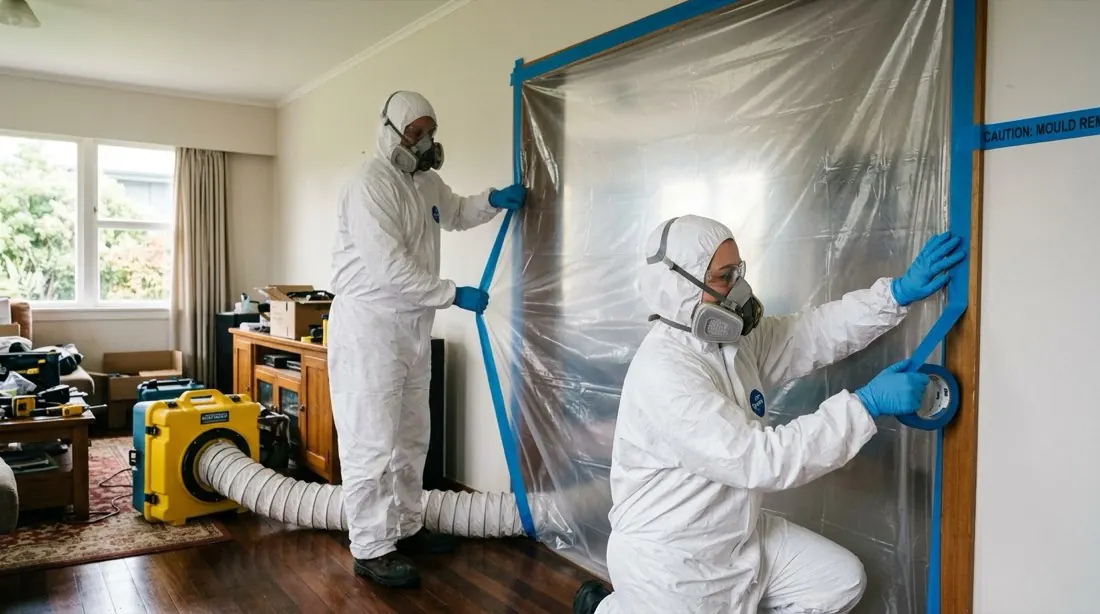
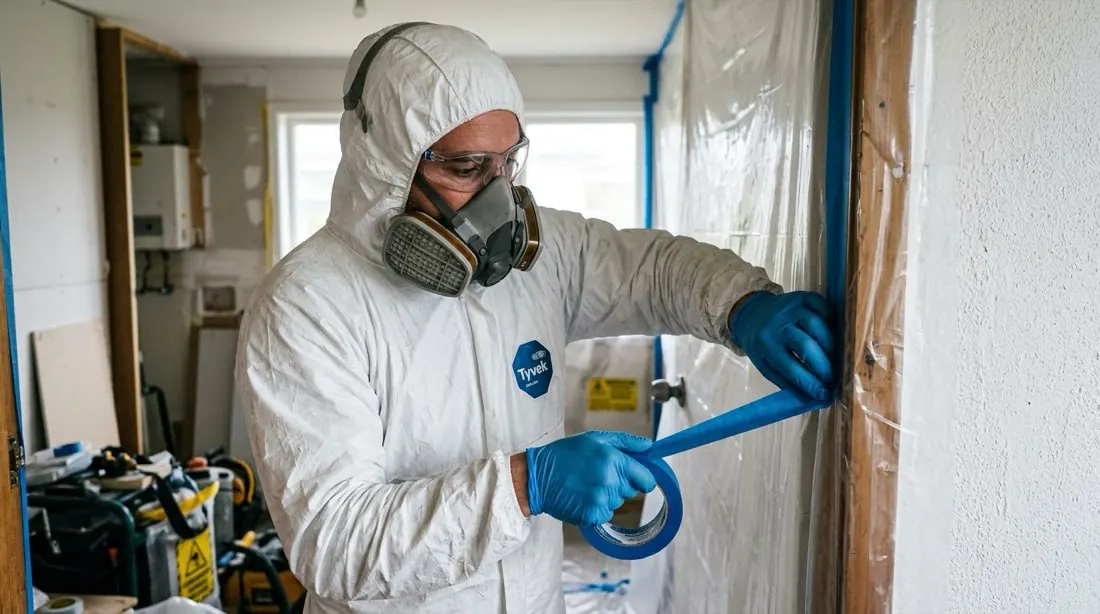
- Containment: Physical barriers and negative air pressure to prevent cross-contamination.
- Removal: Safe removal of affected materials following IICRC S520 standards.
- Treatment: Antimicrobial application to remaining surfaces.
- Drying: Controlled drying to prevent regrowth.
- Clearance: Post-remediation verification to confirm the problem is resolved.
Cost Considerations
Professional mould remediation costs vary based on the extent of the problem, but it is almost always less expensive than the long-term costs of untreated mould — structural damage, health impacts, and reduced property value. Many insurance policies cover mould remediation when it results from a sudden and accidental event.
For a professional assessment of your mould situation, call 0800 452 199 or visit iDry Restorations Mould Remediation.
About the Author
iDry Restorations Team — Mould Removal Auckland is a specialist service of iDry Restorations, Auckland's trusted IICRC-certified restoration company. Our content is written by experienced restoration professionals and reviewed for accuracy. We cite industry standards (IICRC S500, S520; NZS 8510) and reference current New Zealand regulations.
Methodology
This article is based on IICRC industry standards, New Zealand building code requirements, and practical experience from restoration projects across Auckland. It is reviewed periodically and updated as standards and regulations evolve.
Disclaimer
This article provides general information only and does not constitute professional advice. For assessment of your specific situation, contact a qualified restoration professional.