Flood Damage and Mould: The Critical 48-Hour Timeline
After a flood, the clock starts ticking. Mould can begin growing within 24–48 hours of water exposure. Understanding this timeline — and acting fast — is the difference between a manageable cleanup and a major remediation project.
Hours 0–4: The Golden Window
This is when rapid action has the greatest impact:
- Stop the water source if possible and safe to do so
- Turn off electricity to affected areas if water has reached outlets or wiring
- Remove as much standing water as possible — buckets, mops, wet/dry vacuum
- Move furniture, rugs, and belongings to dry areas
- Call a professional restoration company — the sooner equipment arrives, the less damage occurs
Hours 4–24: Extraction and Air Movement
Professional water extraction removes the bulk of water that household equipment cannot reach. Industrial air movers and dehumidifiers are deployed to begin the drying process. Moisture meters establish baseline readings for monitoring.
Hours 24–48: The Mould Risk Window
This is the critical period. If materials remain wet beyond 24 hours, mould spores — which are present in every home — begin to germinate. Porous materials like carpet underlay, gib board, and insulation are particularly vulnerable. Professional drying equipment must be running and moisture levels should be trending downward.
Hours 48–72: Secondary Damage
By this point, without proper drying:
- Mould colonies may be visible on damp surfaces
- Carpet delamination begins (backing separates from fibres)
- Timber swelling and warping accelerates
- Musty odours become noticeable
- Metal components begin to corrode
Beyond 72 Hours: Remediation Territory
Once materials have been wet for more than 72 hours, the scope shifts from drying to remediation. Affected porous materials often need to be removed and replaced. Antimicrobial treatments are required. The cost and disruption increase significantly.
What Professional Restoration Provides
Professional flood restoration includes:
- Industrial-grade extraction equipment (removing hundreds of litres per minute)
- High-volume air movers and commercial dehumidifiers
- Moisture mapping and daily monitoring logs
- Antimicrobial application to prevent mould
- Insurance documentation with photographic evidence
Auckland Flood Response
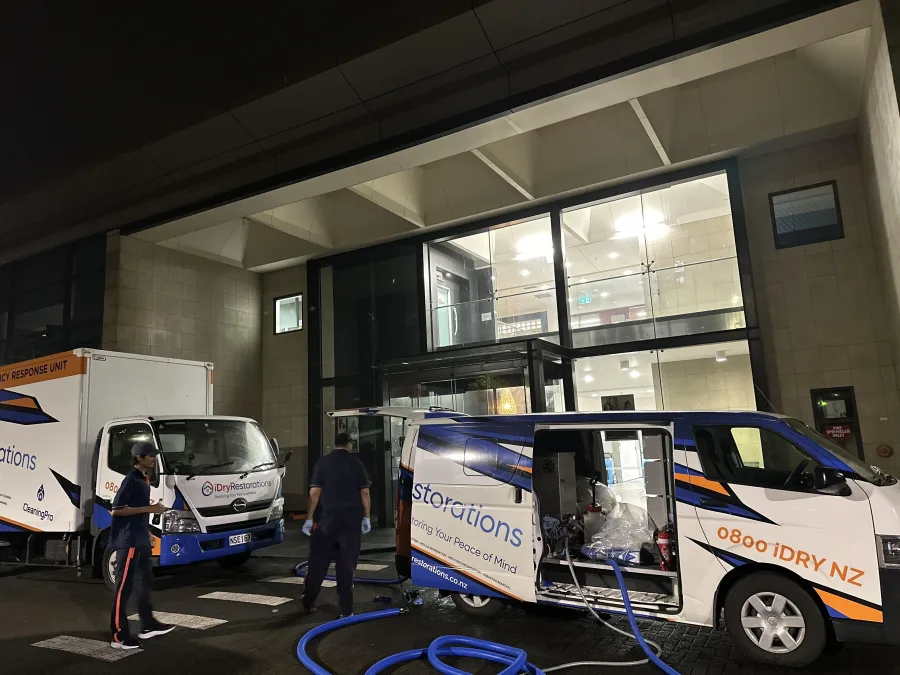
iDry Restorations provides 24/7 emergency flood response across all Auckland suburbs. Our teams carry the equipment needed to begin extraction and drying immediately upon arrival.
If you are dealing with flooding right now, call 0800 452 199 for immediate assistance. For more information, visit iDry Flood Restoration.
About the Author
iDry Restorations Team — Mould Removal Auckland is a specialist service of iDry Restorations, Auckland's trusted IICRC-certified restoration company. Our content is written by experienced restoration professionals and reviewed for accuracy. We cite industry standards (IICRC S500, S520; NZS 8510) and reference current New Zealand regulations.
Methodology
This article is based on IICRC industry standards, New Zealand building code requirements, and practical experience from restoration projects across Auckland. It is reviewed periodically and updated as standards and regulations evolve.
Disclaimer
This article provides general information only and does not constitute professional advice. For assessment of your specific situation, contact a qualified restoration professional.